Brent crude climbed to a five-month peak on Thursday, reaching $112 a barrel for the first time since 18 May, after attacks in Saudi Arabia and incidents involving tankers near the Strait of Hormuz raised concerns about the reliability of global oil supplies, The Guardian reported.
Yemen's Houthi movement, which is aligned with Iran, struck multiple targets inside Saudi Arabia on Wednesday. According to The Guardian, two people were killed and eight injured at a civilian airport in Dammam, while a drone attack on a Saudi oilfield killed two more.
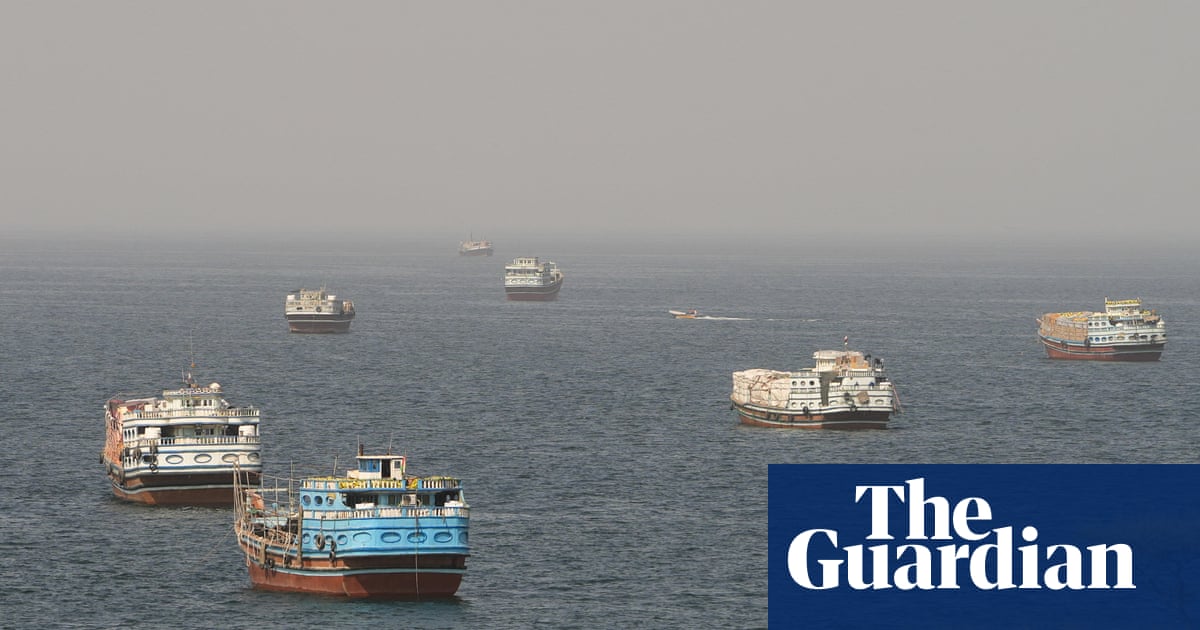
Separately, Iran's Islamic Revolutionary Guard Corps said it had tracked and struck four vessels in the northern Gulf on Wednesday, describing their oil transfers as "illegal." The IRGC said the ships caught fire, and that three other vessels struck mines west of the Strait of Hormuz. It also cautioned Washington that further provocations could bring a broader response targeting US bases in the region.
Why it matters
The price move reflects how quickly the market reacts to any sign that crude flows through the Gulf could be interrupted. Almost eight months have passed since Tehran's effective blockade of the Strait of Hormuz, a chokepoint for a large share of the world's seaborne oil, set off what many analysts feared would be the worst energy supply shock the market has seen.
The wider economy is already feeling the strain. The Guardian reported that global equities weakened on Thursday as investors priced in higher inflation and borrowing costs. Europe's Stoxx 600 fell 1% and the UK's FTSE 100 lost 0.7%. In Asia, Japan's Nikkei 225 dropped 2.7%, South Korea's Kospi fell 3.5% and Hong Kong's Hang Seng shed 3%.
The pain is spreading to individual companies as well. American Airlines shares fell nearly 4% before the market opened after the carrier warned that expensive fuel would push it to a loss for the year. The airline scrapped an earlier forecast that it might post a profit, citing what it called historic pressure from fuel costs.
A year of sharp swings
Oil's path through 2026 has been volatile. Prices broke above $100 a barrel in the first weeks after US and Israeli strikes on Iran, and some market watchers at the time projected levels as high as $150 as Hormuz traffic stalled. Crude peaked at $126 in April, according to The Guardian, then slipped below $100 in late May and down to $71 at the start of July as hopes grew for a ceasefire.
The rally resumed once the memorandum of understanding between Washington and Tehran collapsed and fighting flared again in the Gulf.
There are signs that supply routes are adapting. Data from the tracking firm Kpler cited by The Guardian shows Persian Gulf oil exports have recovered to levels above where they stood before the war, helped in part by more crude moving overland through pipelines to the Red Sea and the Gulf of Oman.
Diplomatic fallout
The security concerns have prompted precautionary steps by US officials and major companies. Reuters reported that Washington has ordered some diplomats and their family members to leave missions in Saudi Arabia and intends to pull family members from several other posts across the Middle East. Saudi Aramco, the state oil company, has told staff to leave its headquarters in Dhahran and work remotely, according to Reuters.
The IRGC's warning to the US adds another layer of risk, suggesting that any further escalation could extend beyond shipping lanes to American military installations in the region.
What to watch next is whether the attacks continue and whether tanker traffic through Hormuz holds steady; a sustained interruption would test how far the pipeline workarounds can offset lost seaborne volumes.